The DriveSales Blog
Practical guides, data-backed strategies, and industry insights for moving company owners and operators. From marketing plans and SEO tactics to CRM best practices and software comparisons — everything you need to win more moves and run a tighter operation.
Where the Best MoversCome To Learn
Unscripted conversations around sales, moving, entrepreneurship, growth, and potential life wisdom in between. Join real people having real business conversations with no fluff.


Booking Rate Is the Number That Actually Predicts Your Moving Company's Revenue
Two moving companies can generate the same leads and land in completely different financial positions. Here's how to calculate, diagnose, and actually improve booking rate.

Moving Company Franchise vs. Independent: What the Fee Stack Actually Costs You
A moving franchise's royalty, brand fund, tech fee, and ad minimum can run 15-20%+ of gross sales for the life of the agreement. Here's the real fee stack, how to read Item 19 without getting fooled, and what independent operators get for a flat monthly fee instead.

The MCS-150 Biennial Update: What Movers Actually Need to Know Before You Miss It
Miss the MCS-150 biennial update and FMCSA deactivates your USDOT number, no warning grace period, civil penalties up to $10,000. Here's the exact filing schedule, what triggers deactivation, and how to track it so it never sneaks up on you again.

How to Handle a Moving Damage Claim: The Federal Deadlines That Decide Whether You Win
Federal law under 49 CFR Part 370 puts a clock on every damage claim the moment it lands on your desk: 30 days to acknowledge it, 120 days to pay, decline, or offer a settlement. Miss either deadline and a defensible claim becomes a compliance problem. Here's exactly what you're required to do, how the valuation math works, and how to keep the paperwork that decides whether you win.

Should Your Moving Company Add Packing Services? What It Actually Costs and Earns
Packing services can be one of the highest-margin add-ons a moving company offers, or one of the fastest ways to blow a schedule. Here's what it actually costs to deliver, how to price it, and what it does to your bottom line.

Junk Removal Business Software: What to Actually Look For Before You Buy
Junk removal runs on $83.1B in industry revenue but thin operational systems. Here's what to actually evaluate in software before you buy, and what vendors oversell.

Estimating Software for Movers: What to Look For Before You Switch From Spreadsheets
Spreadsheet estimates fail quietly, one dropped surcharge at a time. Here's what to actually evaluate in moving estimate software before you switch.

How to Build a Customer Referral Program for Your Moving Company (With Real Incentive Numbers)
Real incentive numbers, tax rules, and tracking mechanics for turning passive word-of-mouth into a repeatable moving-company referral program.

How to Build a Moving Company Tariff That Actually Protects You (Not Just FMCSA's Checklist)
Federal law requires every interstate mover to publish a tariff, but most owners treat it as a compliance formality instead of the document that wins rate disputes. Here's how to build one that actually holds up, plus the FMCSA penalties for skipping it.

Should Your Moving Company Get Broker Authority? The Legal Way to Resell Overflow Leads
More leads than trucks? Broker authority lets you legally place overflow jobs with another carrier for a margin. Here's the cost, the timeline, and what changed under FMCSA's 2026 financial responsibility rule.

How to Build a Lead Scoring System for Your Moving Company (With a Real Point Model)
Every lead doesn't deserve the same follow-up speed. Here's a real point-based scoring model, tiered call priorities, and the research behind why ordering leads correctly can lift booking rates more than generating new ones.

Cost Per Lead for Moving Companies: How to Calculate It, Benchmark It, and Actually Lower It
Most movers know their marketing spend. Few know their real cost per lead by source. Here's the formula, real benchmarks, and what actually moves the number down.

Should Your Moving Company Add Storage Services? What It Actually Costs and Earns
Storage is the most natural add-on for a moving company, but the warehouse lease, insurance, and software costs add up fast. Here's what to expect before you commit.

Accessorial Charges: How to Price and Disclose Them So They Actually Survive a Dispute
Stair carries, long carries, and shuttle fees cause more billing disputes than the move itself. Here's how to price each accessorial charge, disclose it under FMCSA's rules, and make it collectible when a customer pushes back.

Commercial Moving Software: What Facilities Managers Actually Check Before They Sign
A facilities manager evaluating movers for an office relocation isn't shopping like a homeowner. She's running a mini-procurement process built around rate cards, chain-of-custody tracking, and phased scheduling. Here's what she's actually checking before she signs, and the software gap that loses the bid.

Certificate Holder vs. Additional Insured: The COI Mistake Costing Movers Broker Relationships
Sending the wrong Certificate of Insurance status can lose a brokered job on the spot or leave you covering a claim your policy never protected. Here's the real difference, the numbers brokers actually require, and how to stop losing relationships to a lapsed COI.

Full Value Protection vs. Released Value Protection: What Movers Are Legally Required to Disclose (and How to Stop Losing the Claims Argument)
Every interstate mover must offer two liability options and the disclosure has to be airtight: Full Value Protection covers replacement value by default, Released Value Protection caps payouts at 60 cents per pound. Here's the federal law behind each option, the math customers don't expect, and the documentation habit that keeps a $15 claim from becoming a $1,500 dispute.

How to Add Commercial Moving Services to Your Moving Company (Insurance, Pricing, Software)
A residential move ends when the truck pulls away. A commercial move ends when a facilities manager signs off on a phased project that ran on schedule, on budget, with every asset tag accounted for. Here's the insurance a building will actually demand, how to price a job that isn't a single-day flat rate, and the software gap that turns a good pitch into a signed contract.

Why Your Moving Company CRM Needs a Real QuickBooks Integration
Every invoice a moving company re-keys into QuickBooks by hand carries a real error rate and a real cost. Here's what a genuine native QuickBooks integration should do, why Zapier-only sync falls short, and how DriveSales' bidirectional sync eliminates the double-entry problem.

Why Your Moving Company Needs a Customer Portal (Not Just a Status Update Text)
Twenty "where's my stuff" calls on a Friday during peak season is a full-time job nobody budgeted for. Here's what a real customer portal should include, why it cuts inbound call volume so much, and how DriveSales' self-service portal mirrors your live dispatch data.

How to Build a Drip Campaign That Actually Books Moving Jobs
A lead who goes 72 hours without a follow-up has already requested three more quotes. Here's the exact 5-8 message email and SMS sequence that keeps moving leads engaged until they book.

CAC vs. CLV for Moving Companies: How to Decide Which Lead Sources Are Actually Worth It
A cheap lead source isn't the same as a profitable one. Here's the CAC-to-CLV math that tells you which lead sources to scale and which are quietly bleeding you dry.

TCPA and CAN-SPAM Compliance for Moving Company Text and Email Marketing
A single unwanted marketing text without proper consent can cost $500-$1,500 per violation, and the person you texted can sue you directly. Here's exactly where the TCPA and CAN-SPAM consent lines sit, and how to build a fast follow-up system that stays inside them.

How to Build a Lead Management Pipeline for Your Moving Company
Most moving companies don't lose sales to a cheaper competitor. They lose them to a lead that never got a second call. Here's the six-stage pipeline, lead scoring, and booking-rate math that stops leads from disappearing.

7 Proven Strategies for Boosting Sales at Your Moving Company (With the Data Behind Each One)
Speed to lead makes you 100x more likely to reach a new lead. Reviews now decide 97% of local buying decisions. Here are seven sales strategies with the real numbers behind them, and how to run all seven without depending on a rep's memory.

Storage in Transit (SIT): How to Bill It, Track It, and Stop Losing Money on the 180-Day Countdown
FMCSA gives you 180 days before storage-in-transit legally converts to permanent storage — and a specific written notice you owe the customer before that clock runs out. Here's how to price SIT, stay compliant, and stop tracking it on a whiteboard.

Scaling Your Moving Company From 2 Trucks to 20: The Real Roadmap
The systems, hiring, and financing breakpoints that separate movers who scale cleanly from the ones who stall out around truck number 7 -- with real BLS labor data and SBA financing terms.

Google Ads for Moving Companies: The Setup That Stops Wasting Your Budget on Bad Clicks
Local Services Ads vs. Search campaigns, the real 2026 cost-per-lead numbers, and the negative-keyword list that keeps "moving quotes" from eating your budget on people who aren't moving.

The Ultimate Guide to Video Surveys for Moving Estimates (2026)
How AI video surveys, guided surveys, and self-service walkthroughs replace in-home estimate visits, what they cost, and where FMCSA rules still apply.

How to Create a Moving Estimate That Doesn't Blow Up on Moving Day (2026 Guide)
Binding, non-binding, and not-to-exceed estimates explained under FMCSA rules, plus the cube-sheet method and software workflow that keep your numbers from falling apart at delivery.

Closing More Moving Leads: Advanced Sales Techniques
Data-backed objection handling and follow-up techniques for moving sales — why 80% of sales need five follow-ups, and how top reps actually handle price objections.

How to Get More Moving Leads: 9 Sources That Actually Work in 2026 (Ranked by Cost)
Nine real lead sources for moving companies, ranked by cost per lead, plus the follow-up system that decides which ones actually turn into booked jobs.

Moving Company Business Plan: The Free Template Lenders Actually Approve
Most moving company business plans get rejected for the same three reasons: vague numbers, no local market data, and a financial model that doesn't survive one hard question. Here's the exact structure that works, a free downloadable template, and the real math a lender wants to see.

How to Calculate CRM ROI for a Moving Company (With a Free Calculator)
Most moving company owners buy a CRM on a gut feeling and cancel it on a gut feeling six months later. Here's the actual math — what to plug in, what the industry averages get wrong, and a free calculator that turns your own numbers into a real answer.

CRM Email Automation for Moving Companies: The Follow-Up System That Wins Jobs While You Sleep
Moving leads die in the gap between a quote request and a callback. Here's how CRM email and SMS automation closes that gap -- with the real MIT and Harvard response-speed research behind it, not guesswork.

Moving Company Reputation Management: How to Get More 5-Star Reviews (and Turn Them Into Booked Jobs) in 2026
97% of consumers read reviews before hiring a mover, and BrightLocal's 2026 survey shows they now expect faster responses and fresher reviews than ever. Here's the exact system for getting more reviews, responding the right way, and connecting the loop to your booking calendar.

Moving Company Dispatch Software: How to Stop Double-Booking Crews and Cut Windshield Time
A dispatcher juggling six trucks on a whiteboard is one bad morning away from double-booking a crew. Here's what dispatch software actually needs to do for a moving company, what it saves in fuel and labor, and how to tell a real dispatch board from a repurposed field-service tool.

How to Fill Out a Bill of Lading: A Step-by-Step Guide for Movers in 2026
Every household goods bill of lading must carry 17 specific fields under federal law — miss one and you're exposed to disputes, delayed payment, and FMCSA violations. Here's exactly how to fill one out correctly, every time.

Building Customer Trust: The Key to Moving Company Success
Trust is the actual product a moving company sells. Real data on the executive-consumer trust gap, review conversion lift, and complaint-response speed shows what closes it — and where DriveSales' CRM and reputation tools do the daily work that builds it.

Moving Company Website Design: What Actually Converts Leads Into Booked Jobs
A slow page, a long form, and a missing phone number cost more moving-company bookings than a bad crew ever will. Real 2026 data on page speed, review display, and form length shows exactly what converts a homeowner into a booked estimate — and where DriveSales picks up the lead the second the form is submitted.

How to Get a Moving Company License in 2026: USDOT, MC Number, and State Requirements Explained
Getting licensed to run a moving company means clearing two separate systems: federal (USDOT and MC numbers through FMCSA) and, in many states, a state-level permit on top. Here's exactly what each one costs, how long it takes, and which states add extra paperwork on top of the federal minimum.

How to Invoice a Moving Job and Get Paid Faster in 2026
US small businesses now wait 28.8 days to get paid, and 59% are carrying invoices overdue past 30 days. For a moving company running on thin crew-labor margins, that gap isn't a bookkeeping nuisance — it's the difference between making payroll and floating it on a credit card. Here's how to build an invoice that gets paid on move day, not three weeks later.

How to Start a Junk Removal Business in 2026: Costs, Licensing, and the Software That Helps You Scale
Junk removal costs $2,270-$25,000+ to start depending on your vehicle, KD=0 across every core keyword, and zero DriveSales content exists for it today. Here's the real numbers on licensing, insurance, pricing, and what it takes to scale past one truck.

How Moving Company Software Can Help Your Business (With Real ROI Numbers)
A moving company running leads through a group text and a paper calendar is losing jobs it never sees lost. Here's what the real numbers say about CRM ROI, lead response speed, and the size of the household-goods market you're actually competing in — and what to look for in software that closes the gap.

CRM Systems for Moving Companies: A Complete Guide
A generic CRM gives you contacts and a pipeline. A moving company runs on cube sheets, crew dispatch, and estimates that have to match what shows up on the bill of lading. Here's what a moving CRM actually needs to do, and how to tell a real one from a relabeled sales tool.

Social Media Marketing for Moving Companies: What Actually Gets You Booked in 2026
97% of consumers read reviews before choosing a local business, and Facebook still has more moving-company customers on it than any other platform. Here's what the 2026 data says about where movers should actually post, what content earns leads, and how to route every comment into a booked estimate instead of a missed one.

Moving Company Insurance Costs in 2026: What You'll Actually Pay to Stay Fully Covered
Moving company insurance runs $1,750 to $1,920 a month once you stack general liability, cargo, commercial auto, and workers' comp — and every dollar of it is a compliance requirement, not an option. Here's what each policy actually costs in 2026, why a single lapsed filing can shut down your MC authority overnight, and how to keep every policy and certificate on track as you add trucks.

How to Hire and Keep a Moving Crew in 2026: Cost, Training, and Retention That Actually Works
Replacing one mover costs real money and most moving companies have no idea how much. We break down the actual cost of a bad hire, the wage floor you're competing against, why crews really quit in year one, and the hiring-to-retention system that keeps trucks staffed through peak season — with real, verifiable numbers.

Moving Company Profit Margins: 2026 Benchmarks and How to Improve Yours
Moving companies sit in the trucking sector for benchmarking purposes, where the average net margin is 3.79%. Top operators clear 20%+ by hitting DriveSales' cost-structure targets: crew labor under 30%, admin under 10%, trucks under 10%. We break down the 2026 numbers, the exact math, and what separates the two groups — with real, verifiable sources.

How to Start a Moving Company in 2026: The Complete Guide
The US moving industry generates $23.4 billion annually with room for well-run newcomers. Here's everything you need — from licensing ($0 USDOT) and insurance to hiring crews and landing your first customers.
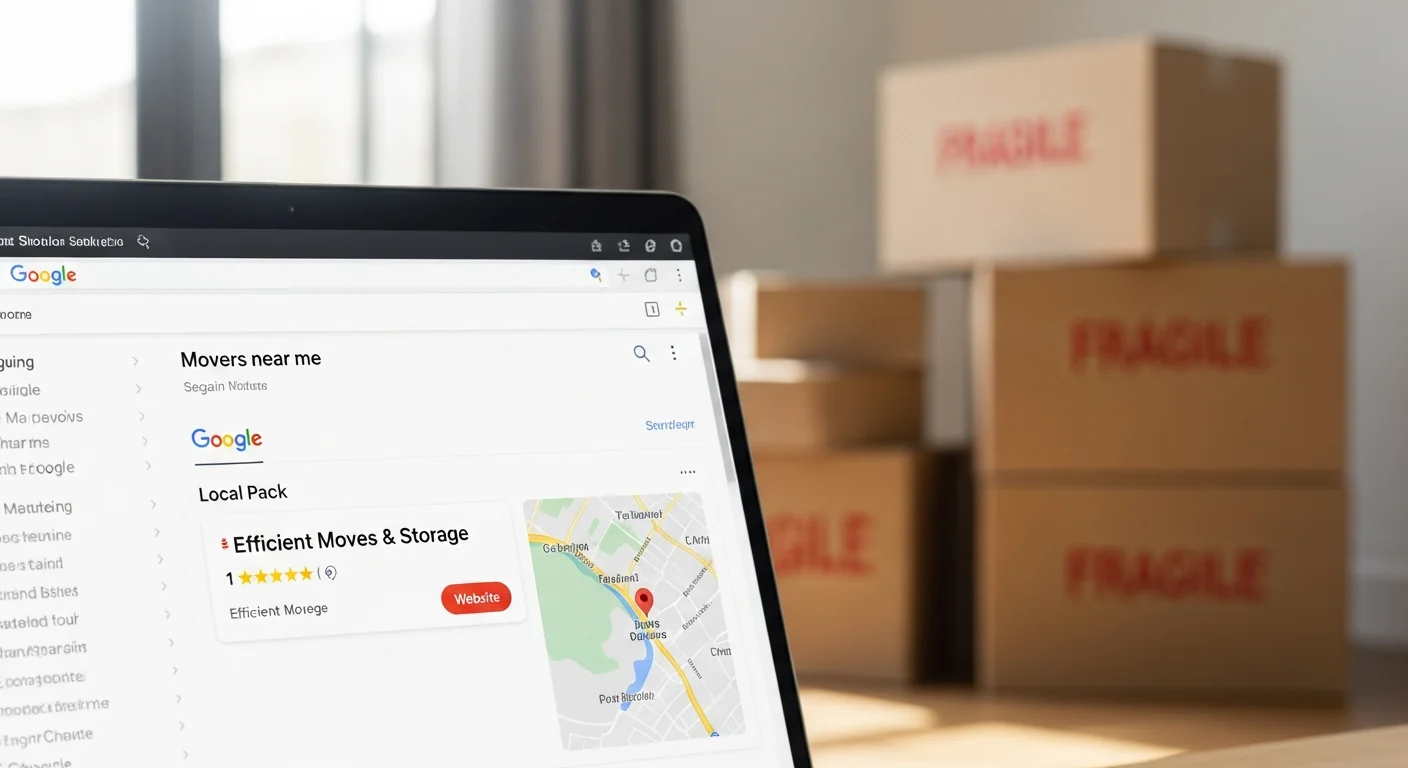
SEO for Moving Companies: 7 Steps to Rank Higher and Get More Leads
73% of moves are booked online. Learn the exact SEO strategies moving companies use to dominate local search, rank in Google Maps, and generate leads at $31 each instead of $181.
![The Best Moving Company Software in 2026 [Comparison]](https://cdn.drivesales.com/blog/best-moving-software-hero.webp)
The Best Moving Company Software in 2026 [Comparison]
The moving industry runs on 9,114 competing businesses chasing the same customers. We tested and compared 12 software platforms — from AI-powered CRMs to legacy tools — so you don't have to make an expensive mistake.

How to Create A Marketing Plan For Your Moving Business
Most moves are now researched and booked online, yet most movers still rely on word-of-mouth. Here's a data-backed marketing plan covering local SEO, Google Ads, reviews, and speed-to-lead strategies.