Why SEO Matters More Than Ever for Moving Companies
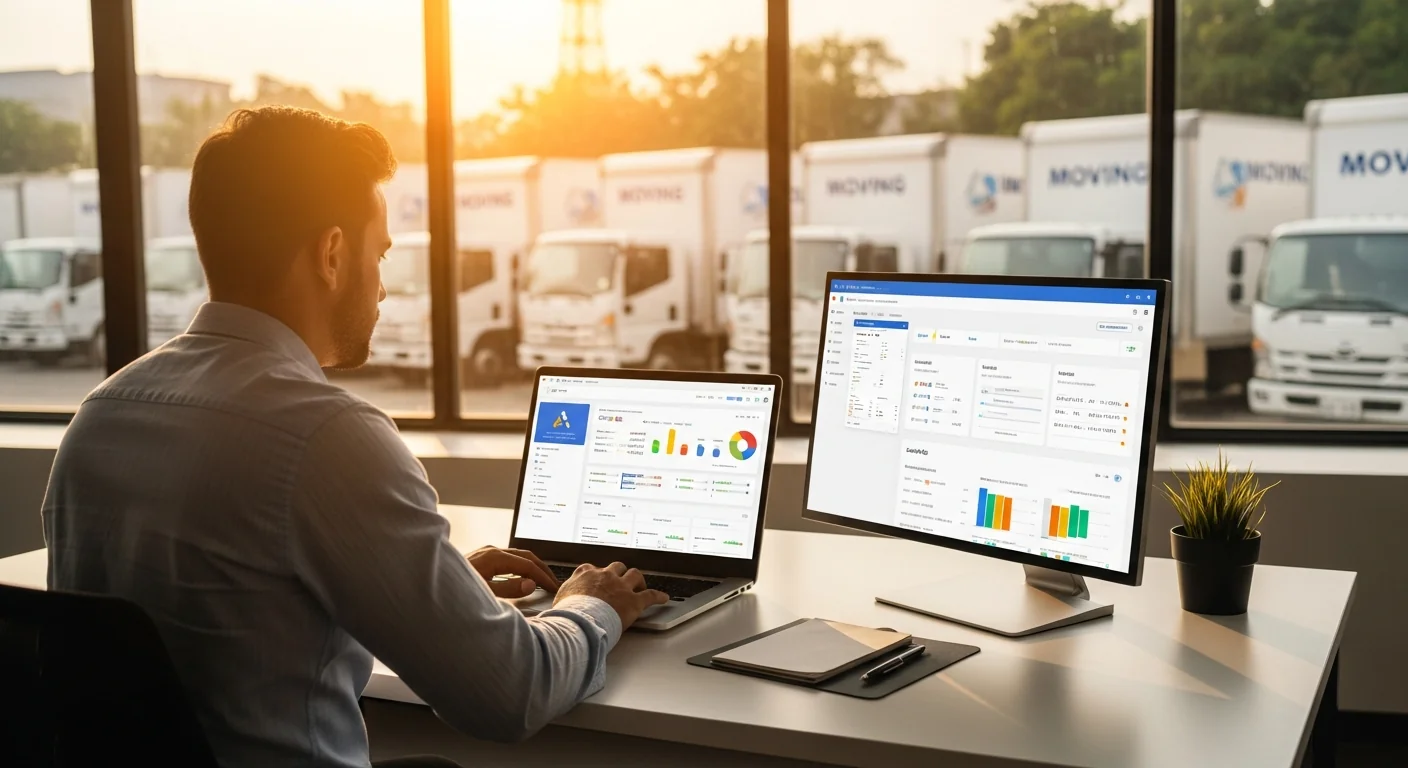
73% of all moves were booked online in 2025, with roughly 70% of those searches starting on a mobile device (WeMove.ai, 2025). If your moving company does not show up when someone searches "movers near me," you are handing leads directly to your competitors.
The US moving services industry is worth $23.4 billion with over 9,100 businesses competing for customers (IBISWorld, 2026). That competition makes visibility on Google the single most important growth lever for any moving company today.
Here is the good news: SEO generates moving leads at roughly $31 per lead compared to $181 per lead from paid ads, making it 5.8 times more cost-effective (First Page Sage, 2026). The median ROI for SEO sits at 748%, meaning every dollar you invest returns $7.48 on average.
This guide walks you through seven concrete steps to improve your moving company's search rankings, attract more qualified leads, and reduce your customer acquisition costs. Whether you run a two-truck local operation or a multi-state moving business, these strategies work.
Step 1: Optimize Your Google Business Profile
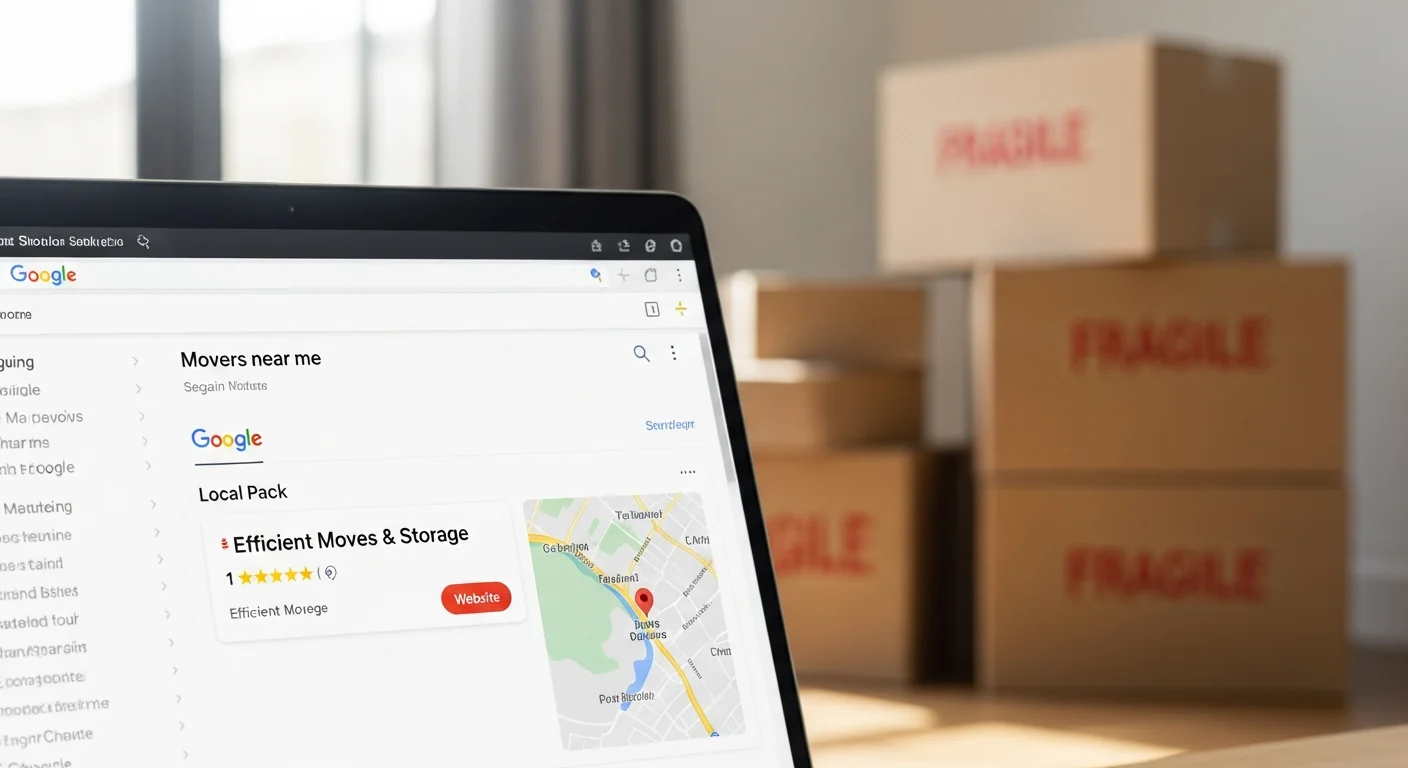
A fully optimized Google Business Profile appears 80% more often in local search results and generates four times more website visits than incomplete profiles (Birdeye, 2025). Your GBP listing is the foundation of local SEO for moving companies because it directly controls whether you show up in the Google Maps "local pack," the three-listing box that appears at the top of local searches.
Here is how to optimize your profile:
Claim and Verify Your Listing
- Go to business.google.com and claim your listing if you have not already
- Complete every single field including business name, address, phone, website, hours, and service area
- Choose the right primary category. Select "Moving Company" as your primary category, then add secondary categories like "Moving and Storage Service" or "Office Mover"
- Add your service area. List every city and zip code you serve. Google uses this to match you with "near me" searches in those areas
Add Photos and Posts Weekly
Moving companies with 100 or more photos on their GBP receive 520% more calls than businesses with fewer than five photos (Google internal data). Upload photos of your trucks, crews, completed moves, and happy customers. Post weekly updates about seasonal specials, moving tips, or community involvement.
Enable Messaging and Q&A
Turn on the messaging feature so potential customers can text you directly from your listing. Monitor and answer the Q&A section, because unanswered questions signal neglect to both Google and customers.
71% of Google Business Profile interactions come from mobile devices (Birdeye, 2025). Make sure your phone number is clickable and your website loads fast on phones.
Step 2: Build Location-Specific Service Pages
46% of all Google searches have local intent (WiserReview, 2026). A single generic "Services" page will not rank in multiple cities. You need dedicated pages for each service in each location you cover.
Create Pages for Every Service-Location Combination
If you offer residential moving, commercial moving, and packing services in Dallas, Fort Worth, and Arlington, that is nine pages:
- Residential Movers in Dallas
- Commercial Moving Services Dallas
- Packing Services Dallas
- Residential Movers in Fort Worth
- Commercial Moving Services Fort Worth
- And so on for each combination
What Each Page Needs
Every service-location page should include:
- A unique title tag with the service and city name, like "Residential Movers in Dallas, TX - Your Company Name"
- 500 to 800 words of unique content describing that specific service in that specific area. Mention neighborhoods, landmarks, and local details that prove you actually serve there
- Your NAP information (Name, Address, Phone) matching exactly what appears on your GBP listing
- A clear call to action with a quote request form or click-to-call button
- Customer testimonials from actual moves in that area when possible
Avoid Thin or Duplicate Content
Do not just copy the same page and swap out city names. Google penalizes this. Each page needs genuinely unique content that addresses the specific moving challenges, distances, and logistics of that area.
Step 3: Get More Customer Reviews (and Respond to Every One)
97% of consumers read online reviews for local businesses before making a decision (BrightLocal, 2026). For moving companies, reviews are not just nice to have. They directly affect whether you show up in search results and whether customers choose you over competitors.
The Star Rating Threshold Has Risen
68% of consumers will only consider a business with 4 or more stars, up from 55% in 2025. Even more striking, 31% of consumers now require 4.5 stars or higher before they will even contact a business (BrightLocal, 2026). If your rating has slipped below 4.0, fixing it should be your top priority.
How to Generate More Reviews
A reputation management system can automate much of this process, but here are the fundamentals:
- Ask at the right moment. The best time to request a review is immediately after a successful move, while the customer is still feeling relieved and grateful
- Make it effortless. Send a direct link to your Google review page via text message within two hours of completing the move
- Train your crew. Movers who mention reviews in person get three times more responses than email-only requests
- Follow up once. Send one reminder three days later if they have not posted. Do not send more than that
Respond to Every Review
Respond to every single review, positive or negative, within 24 hours. For positive reviews, thank the customer by name and mention something specific about their move. For negative reviews, acknowledge the issue, apologize, and offer to resolve it offline. Google's algorithm considers review response rate and recency as ranking factors.
Step 4: Fix Your Technical SEO Foundation
The fastest content strategy in the world will not help if Google cannot properly crawl and index your website. Technical SEO issues are common on moving company websites, especially those built on older platforms or DIY website builders.
Site Speed Matters
76% of "near me" mobile searches lead to a business visit within 24 hours (SeoProfy, 2026). But if your site takes more than three seconds to load, over half of those visitors will leave before they even see your phone number. Run your site through Google PageSpeed Insights and fix these common issues:
- Compress images. Moving company sites often have large, uncompressed photos. Convert them to WebP format and resize to the dimensions actually displayed on screen
- Enable browser caching. This prevents repeat visitors from re-downloading your entire site every time
- Minimize code. Remove unused CSS and JavaScript. If you use WordPress, deactivate plugins you are not using
Mobile Optimization Is Non-Negotiable
60% of mobile users contact a business directly from search results using click-to-call or directions (WiserReview, 2026). Your website must:
- Load in under three seconds on mobile
- Have buttons and phone numbers large enough to tap easily
- Display your phone number prominently at the top of every page
- Have forms that are simple to fill out on a small screen
Schema Markup for Moving Companies
Add LocalBusiness schema markup to your website. This structured data helps Google understand your business type, service area, hours, and contact information. It can also earn you rich results in search, like star ratings and business hours appearing directly in the search listing.
At minimum, implement these schema types:
- LocalBusiness with your moving company details
- Service for each service you offer
- Review to display your star rating in search results
- FAQ on pages that answer common questions
Step 5: Create Content That Attracts Moving Customers
58.5% of Google searches in the US now end without a click (SparkToro/Datos, 2026). That means Google is answering more questions directly in search results through featured snippets and AI Overviews. To capture traffic in this environment, you need content that both answers questions directly and gives readers a reason to click through to your site.
Target Bottom-of-Funnel Keywords First
Most moving companies make the mistake of writing generic blog posts about "moving tips" that attract browsers, not buyers. Instead, start with content that targets people who are ready to hire:
- "Best movers in [city]" comparison pages
- "How much does it cost to move a 3-bedroom house in [city]" pricing guides
- "[Your Company] vs [Competitor]" comparison pages
- Moving cost calculators for specific routes you serve
Then Build Middle-of-Funnel Content
Once your bottom-of-funnel content is live, create content for people earlier in the decision process:
- Moving checklists organized by timeline (8 weeks out, 4 weeks, 1 week, moving day)
- Neighborhood guides for the cities you serve
- "What to expect" guides for different move types (long distance, apartment, office)
- Seasonal content about the best time to move in your area
Answer-First Formatting
Google AI Overviews now trigger on 40.16% of local business queries (Mover Marketing AI, 2026). To get cited in these AI-generated answers, structure your content so the first paragraph after each heading directly answers the question the heading asks. Put the key statistic or answer in the first 40 to 60 words of each section.
Step 6: Build Citations and Backlinks
Citations are mentions of your business name, address, and phone number on other websites. They are one of the strongest local SEO ranking signals, and many moving companies ignore them entirely.
Priority Citation Sources for Movers
Start with these directories and build outward:
- General directories: Yelp, Better Business Bureau, Angi, HomeAdvisor, Thumbtack
- Moving-specific directories: MovingCompanyReviews.com, MyMovingReviews, iMoving
- Local directories: Your local Chamber of Commerce, city business directories, neighborhood association websites
- Data aggregators: Infogroup, Acxiom, Localeze, Factual. These feed data to dozens of smaller directories
NAP Consistency Is Critical
Your business Name, Address, and Phone number must be identical everywhere it appears online. Even small differences, like "St." versus "Street" or a missing suite number, can confuse Google and dilute your local ranking power. Audit your listings quarterly and fix any inconsistencies.
Earning Backlinks
Backlinks from other websites pointing to yours remain one of Google's top ranking factors. Here are practical ways moving companies can earn them:
- Partner with real estate agents. Offer to be their recommended mover in exchange for a link on their resources page
- Sponsor local events. Community events, school fundraisers, and charity drives often list sponsors with links on their websites
- Create useful local content. Neighborhood guides, cost-of-living comparisons, and moving statistics pages naturally attract links from local blogs and news sites
- Get featured in local media. Reach out to local reporters with moving season statistics or trends. A single local news mention can be worth dozens of directory links
Step 7: Track Your Results and Adjust
SEO is not a one-time project. It is an ongoing process that requires regular measurement and adjustment. Without tracking, you are guessing.
Key Metrics to Monitor Monthly
- Google Business Profile insights: views, searches, calls, direction requests, and website clicks
- Organic search traffic: total visitors from Google, broken down by page
- Keyword rankings: track your position for your top 20 target keywords
- Lead volume and source: how many quote requests come from organic search versus paid ads versus referrals
- Conversion rate: what percentage of website visitors request a quote
- Cost per lead: divide your monthly SEO investment by the number of leads generated
Tools You Need
You do not need expensive enterprise tools. These free and affordable options cover most moving companies:
- Google Search Console (free) shows which keywords bring traffic and flags technical issues
- Google Analytics (free) tracks visitor behavior and conversion rates
- Google Business Profile dashboard (free) provides local search performance data
- A rank tracking tool like BrightLocal or Whitespark ($30 to $80 per month) monitors your local keyword positions
Realistic Timeline
SEO is not instant. Expect this general progression:
- Months 1 to 2: GBP optimization and technical fixes. You may see small improvements in map pack visibility
- Months 3 to 4: Service and location pages start getting indexed. Citation building begins showing effect
- Months 5 to 6: Content strategy gains traction. First measurable ranking improvements for target keywords
- Months 7 to 9: Consistent lead flow from organic search begins
- Months 10 to 12: SEO becomes your most cost-effective lead channel, typically achieving positive ROI
Common SEO Mistakes Moving Companies Make
Even well-intentioned moving companies sabotage their own search rankings. Here are the errors we see most often:
- Ignoring Google Business Profile. Your GBP listing influences local rankings more than any other single factor. A neglected profile with outdated hours, no photos, and unanswered reviews is actively hurting you
- Building one big "Services" page. A single page listing all your services in all your areas will never rank as well as dedicated pages targeting specific service-location combinations
- Buying links from SEO spam companies. Google penalizes unnatural link patterns. Those "$99 for 500 backlinks" offers will do more damage than doing nothing at all
- Neglecting mobile users. When 70% of moving searches happen on phones, a website that is hard to use on mobile is leaving money on the table
- Expecting instant results. SEO compounds over time. Companies that quit after three months never reach the payoff period where organic leads start flowing consistently
Frequently Asked Questions
How long does SEO take for a moving company?
Most moving companies see measurable improvements in local search visibility within three to four months of consistent effort. However, significant lead flow typically begins around months seven to nine. SEO delivers a median ROI of 748% (First Page Sage, 2026), but it requires patience and consistency to reach that return.
How much should a moving company spend on SEO?
Small local movers typically invest $500 to $1,500 per month on SEO, while larger regional companies spend $2,000 to $5,000 per month. The right budget depends on your market competition, number of service areas, and growth goals. Compare this to pay-per-click advertising, where moving keywords can cost $10 to $30 per click.
Can I do SEO myself, or should I hire an agency?
You can handle many foundational tasks yourself, especially Google Business Profile optimization, review generation, and basic content creation. Technical SEO, link building, and competitive analysis often benefit from professional help. Start with the DIY steps in this guide and consider hiring an agency once you have saturated what you can do on your own.
What is the most important SEO factor for moving companies?
Google Business Profile optimization is the single highest-impact activity for local moving companies. It directly controls your visibility in the Google Maps local pack, which is where 46% of local searches lead (WiserReview, 2026). After GBP, customer reviews and location-specific service pages are the next biggest ranking factors.
Does my moving company need a blog?
Yes, but focus on quality over quantity. Two well-researched articles per month targeting specific keywords your customers search for will outperform daily generic posts. Prioritize bottom-of-funnel content like cost guides and city-specific moving resources over top-of-funnel "10 packing tips" articles.
Start Ranking Higher Today
You now have a complete, step-by-step playbook for improving your moving company's search visibility. Start with Step 1, optimizing your Google Business Profile, because it delivers the fastest visible results. Then work through each subsequent step systematically.
The moving companies that invest in SEO today will dominate their local markets for years to come. Pair your SEO strategy with a CRM built for movers and you will convert more of those organic leads into booked jobs. At $31 per lead versus $181 from paid ads, organic search is the most profitable growth channel available to you. The only question is whether you start now or let your competitors get there first.