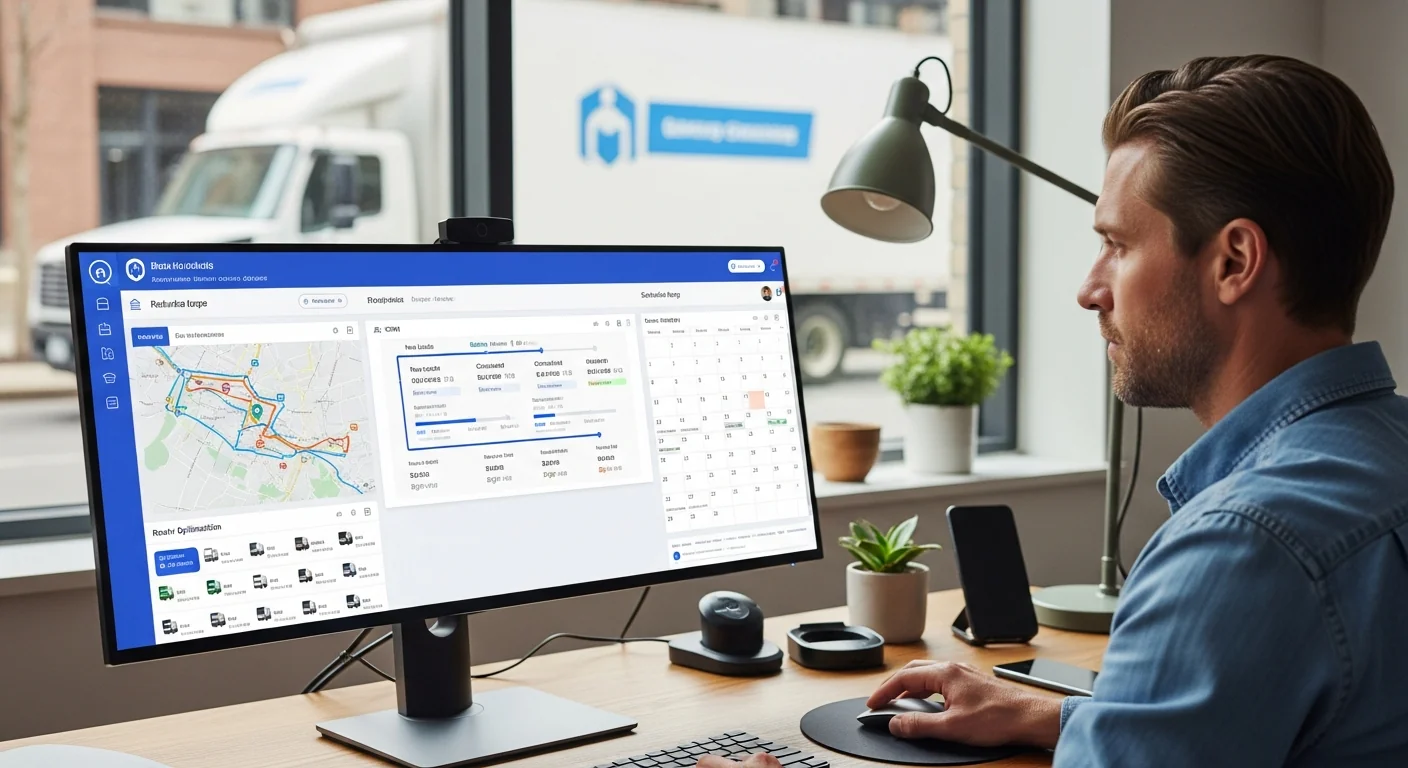
Why Do So Many Moving Companies Still Run on Spreadsheets and Sticky Notes?
Because switching feels riskier than staying put — until the sticky-note system starts costing real money. A moving company with two trucks can track jobs in a shared calendar and a group text. Add a third truck, a second dispatcher, or a marketing campaign that actually generates leads, and the informal system starts dropping things: a lead that never got a follow-up call, a crew double-booked against a job nobody moved off the whiteboard, an estimate that doesn't match what the crew finds on moving day. None of that is a people problem. It's a systems problem, and it's exactly what purpose-built moving company software is built to close.
This isn't a case for buying software for its own sake. It's a case built on three verifiable numbers: what CRM systems return on investment across industries, what response speed does to lead conversion, and how many household-goods carriers are actually competing for the same customers right now.
What Does a CRM Actually Return on the Money Spent?
Nucleus Research has tracked CRM return on investment across hundreds of real deployments since 2011, and the most recent full analysis found companies get back $8.71 for every dollar spent on CRM software — up from $5.60 just three years earlier (Nucleus Research, "CRM Pays Back $8.71 for Every Dollar Spent"). That figure is now over a decade old and it's an average across all industries, not moving companies specifically — worth saying plainly rather than presenting it as a guaranteed number for any one business. But the direction of the finding has held up: Nucleus's follow-on case studies on individual CRM platforms since then have continued to show returns in the same range or higher, and the underlying reason it works hasn't changed — a CRM stops leads and follow-ups from depending on one person's memory.
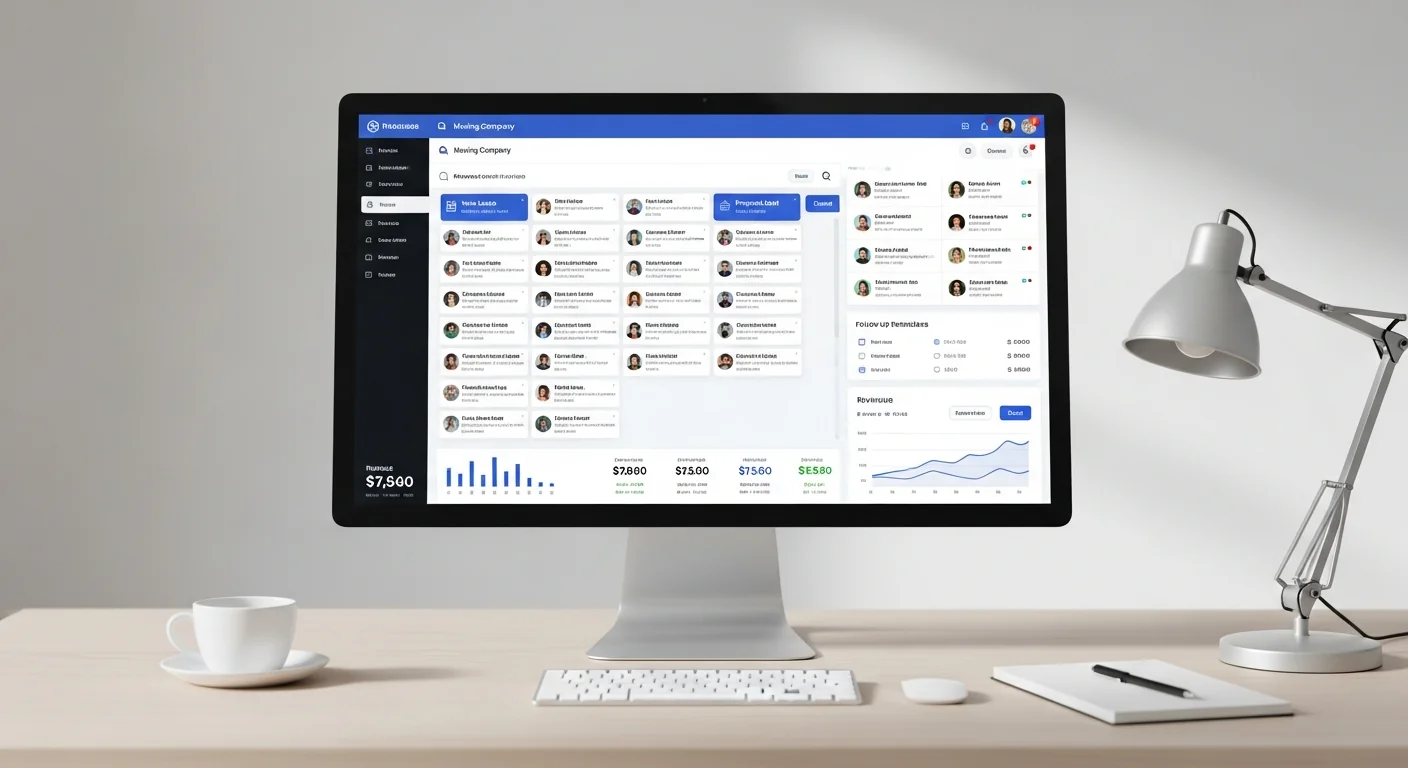
For a moving company, that shows up as fewer leads that age out before anyone calls back, and fewer jobs where the crew shows up without the customer's actual inventory or special-item notes already in front of them. That's the specific gap DriveSales' CRM for moving companies is built to close — one system that holds the lead, the estimate, and the customer notes together instead of splitting them across an inbox, a calendar app, and a paper folder.
Does Responding to a Lead Faster Actually Change Whether You Book the Job?
Yes, and the effect is bigger than most owners assume. The widely cited InsideSales.com/MIT Lead Response Management study tracked more than a million sales leads and found that the odds of making live contact with a lead drop 100-fold when a business waits 30 minutes to respond instead of 5 minutes — and even the gap between 5 minutes and 10 minutes cuts contact odds by roughly 5 times (InsideSales.com/MIT, "The Lead Response Management Study"). The same research found that once a rep does make contact, calling within an hour of a lead coming in makes that rep roughly 7 times more likely to have a meaningful qualifying conversation than waiting even one hour more.
For a moving company, that 30-minute gap is easy to hit by accident. A lead comes in from a quote form while the owner is on a job site, the office manager is on another call, and nobody sees the notification for 40 minutes. Multiply that by every lead a marketing dollar generates and the math turns against you fast, no matter how good the crews are. Software closes that gap two ways: instant lead alerts so nobody has to be watching an inbox, and automated first-touch messages that keep a lead warm the moment it lands rather than waiting on a human to be free. Our glossary entry on lead response time breaks down the specific 5-minute benchmark and what a fast-response workflow actually looks like day to day, and the lead nurturing glossary entry covers what happens to a lead that isn't ready to book on the first call.
How Many Household-Goods Movers Are Actually Competing for the Same Customers?
More than most owners picture. FMCSA's registration data shows 7,636 companies currently hold active Household Goods operating authority nationwide, out of just over 2 million total registered motor carriers of every type (FMCSA Registration Statistics, A&I Online, snapshot dated June 26, 2026). That's a real, specific competitive set — not a vague "the industry is crowded" claim — and it means the moving companies converting leads faster and following up more consistently aren't winning on truck count or reputation alone. They're winning because a lead that calls three movers on the same afternoon books with whichever one calls back first with a clear, professional answer.
Labor costs are the other side of the profitability equation software touches directly. The median hourly wage for laborers and freight, stock, and material movers — the closest published federal wage line to a moving crew member, since the Bureau of Labor Statistics has no dedicated occupation code for movers specifically — was $19.35 in May 2025 (BLS Occupational Employment and Wage Statistics). Every hour a crew spends idling because dispatch sent them to the wrong address, or redoing an estimate because the original one didn't match the actual inventory, is that wage burned with nothing to show for it. Software that gets the estimate right the first time and the dispatch schedule tight is a direct labor-cost lever, not just a convenience.
What Should a Moving Company Actually Look for in Software?
Three functions matter more than any feature checklist:
- A CRM that captures and scores every lead automatically, so a lead's speed-to-response doesn't depend on whether the right person happened to check their phone. See DriveSales' CRM for moving companies for how that looks in practice.
- Estimating tools that produce an accurate quote fast, whether from a video survey, an in-home walkthrough, or a phone consultation — the goal is a number the crew can actually deliver on moving day, not a guess that turns into a dispute. DriveSales' moving estimate software is built around exactly this.
- A dispatch board that shows every crew and truck in real time, so a schedule change doesn't require a phone tree to communicate. Our scheduling and dispatch feature covers what a real-time dispatch board should do for a growing fleet.
A fourth piece ties the first three together: reporting that shows which of those systems is actually working. DriveSales' reporting and analytics turns lead response time, estimate accuracy, and crew utilization into numbers an owner can act on weekly, not guess at quarterly.
FAQ
Is a $8.71-per-dollar CRM return realistic for a small moving company specifically?
The Nucleus Research figure is a cross-industry average built from real case studies, not a moving-industry-specific number, and it's worth treating as a directional benchmark rather than a guarantee. The mechanism behind it — fewer leads lost to slow or missed follow-up — applies directly to moving companies, where a single missed callback is a lost job, not just a missed touchpoint.
How fast does a moving company actually need to respond to a new lead?
Under 5 minutes, based on the MIT/InsideSales.com research showing contact odds fall 100-fold by the 30-minute mark. In practice that means an automated instant acknowledgment the moment a lead comes in, backed by a live alert to whoever's on point that day, rather than relying on someone checking email.
Do small moving companies with only a few trucks need dedicated software, or can they get by with spreadsheets?
A one- or two-truck operation can run informally for a while. The tipping point is usually the first time a lead goes uncalled for a day, or a crew shows up to a job with the wrong inventory — both are signs the manual system is already costing more in lost revenue than software would cost to run.
What's the single biggest mistake moving companies make with their existing software stack?
Splitting the CRM, the estimating tool, and the dispatch board across separate logins that don't talk to each other. Every additional login is a place data can go stale or get re-entered wrong, and it's the reason a booked estimate doesn't automatically become a dispatch-board entry with the same inventory and notes attached.
How is DriveSales different from a generic CRM adapted for moving companies?
It's built around the variables a move actually has — cube capacity, crew certifications, multi-stop long-distance jobs, binding versus non-binding estimates — rather than adapted from a general-purpose sales CRM or field-service tool that treats a move like any other service call.
See the Numbers on Your Own Business
Run your current lead volume, response times, and crew utilization through the DriveSales ROI calculator to see where the $8.71-per-dollar CRM return and the 100x lead-response gap actually show up in your numbers. For the broader operating benchmarks behind fleet size, crew costs, and industry structure, see DriveSales' moving industry statistics hub. Or go straight to the source — book a 15-minute demo and see the CRM, estimating, and dispatch board running together on a business your size.
Related reading: our complete guide to CRM systems for moving companies and the best moving company software compared.
![The Best Moving Company Software in 2026 [Comparison]](https://cdn.drivesales.com/blog/best-moving-software-hero.webp)